Your Body Changed the Rules at 40 — Here's How to Win Anyway
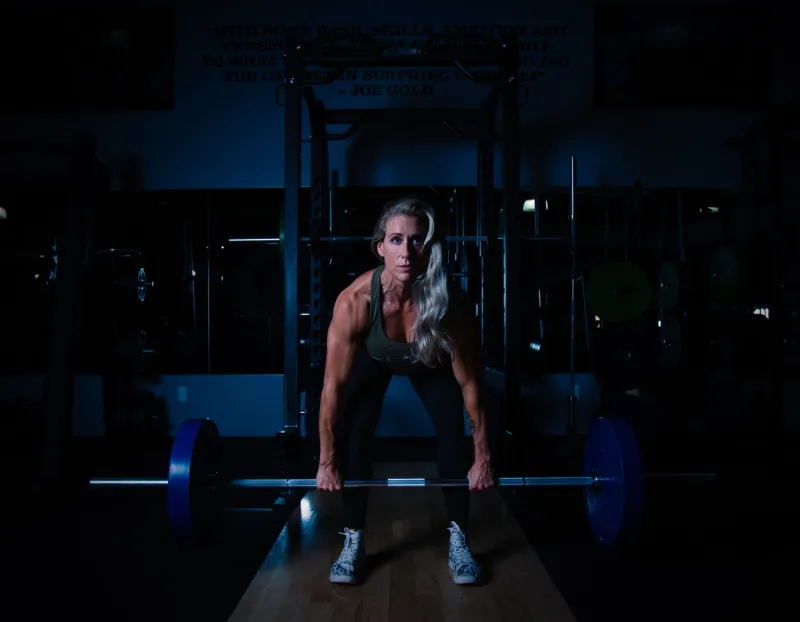
There's a cruel little joke tucked inside your 40s. For the first time in maybe ever, you've got the bandwidth to actually focus on your health. The kids are more independent, your career has some footing, and you've stopped caring about the things that used to eat up all your mental energy. You join a gym. You download a nutrition app. You buy the good olive oil. You are ready.
And then your body looks you dead in the eye and says: cute.
You're not imagining it. The rules genuinely changed. And the frustrating part isn't that getting healthy is impossible after 40 — it's that the playbook you used in your 20s and 30s has quietly expired. Understanding why is the first step to actually doing something about it.
What's Actually Happening Inside Your Body
Let's start with metabolism, because that's usually the first thing people blame — and for once, they're not wrong.
After 40, your resting metabolic rate starts to dip. This isn't dramatic, but it's consistent. Research suggests that adults lose roughly 3 to 8 percent of their muscle mass per decade starting in their 30s, and muscle is metabolically expensive tissue — meaning it burns calories even when you're doing absolutely nothing. Less muscle means your engine runs a little quieter. The same lunch you ate at 32 hits differently at 44.
Hormones are the other big piece of the puzzle. For women, perimenopause can begin as early as the early 40s, bringing fluctuating estrogen levels that affect everything from sleep quality to where your body stores fat (spoiler: it starts preferring your midsection). For men, testosterone levels decline gradually — about 1 percent per year after 30 — which affects energy, muscle retention, and recovery time.
Speaking of recovery: if you've noticed you can't bounce back from a hard workout the way you used to, that's not weakness. That's biology. Inflammation response changes, repair processes slow down, and connective tissue becomes less forgiving. Ignoring this is how people end up sidelined with injuries that take three times as long to heal as they expected.
None of this is doom and gloom. It's just the actual terrain you're working with.
Why the Old Approach Stops Working
The biggest mistake people make when they recommit to fitness in their 40s is defaulting to what worked before. They go hard five days a week, slash calories, and then wonder why they're exhausted, injured, or not seeing results.
The hard-and-fast approach was never particularly sustainable — it just had a more forgiving recovery window when you were younger. Now the margin for error has narrowed. Overtraining doesn't just leave you sore; it can spike cortisol levels, which actively promotes fat storage and disrupts sleep. Under-eating, especially protein, accelerates muscle loss. Both of these are counterproductive to exactly what you're trying to accomplish.
The irony is that the more aggressive approach often delivers worse results in your 40s than a smarter, steadier one.
What Actually Works Now
Prioritize strength training — seriously.
If you only do one thing differently, make it this. Resistance training is the single most effective tool for counteracting age-related muscle loss, improving metabolic rate, supporting bone density, and managing hormonal symptoms. You don't need to become a powerlifter. Two to three sessions a week of compound movements — squats, deadlifts, rows, presses — is enough to make a real difference. The research on this is about as close to unanimous as exercise science gets.
Eat more protein than you think you need.
Current guidelines for protein intake were largely built around younger adults. Many nutrition researchers now suggest that people over 40 need more protein per pound of body weight than they did at 25, because the body becomes less efficient at using it. Aim for roughly 0.7 to 1 gram of protein per pound of body weight daily. This also helps with satiety, which makes managing overall calories less of a white-knuckle experience.
Treat sleep like the performance tool it is.
Sleep is when your body repairs muscle, regulates hunger hormones, and processes stress. Skimping on it doesn't just make you tired — it actively undermines everything else you're doing. If you're consistently getting fewer than seven hours, no workout program or diet is going to perform at its best. This is especially relevant for women navigating perimenopause, when sleep disruption is common and compounding.
Build in recovery like it's part of the plan — because it is.
Rest days aren't laziness. They're when adaptation actually happens. If you're strength training three days a week, those other days can include walking, yoga, or light cycling — not because you're slacking, but because low-intensity movement supports circulation and recovery without adding stress to the system.
Adjust your timeline.
This might be the hardest one. Results in your 40s often come more slowly than they did before, and that requires a genuine mindset shift. The person who builds sustainable habits over six months will almost always outperform the person who goes all-in for six weeks and burns out. Progress is still progress, even when it's quieter.
The Part Nobody Talks About Enough
There's an emotional layer to all of this that deserves some airtime. A lot of people in their 40s are quietly grieving the body they used to have — the one that could eat anything, recover overnight, and respond to a few weeks of effort with visible results. That grief is real, and it doesn't make you vain or shallow.
But there's something worth sitting with here: the body you have right now, the one that's navigating hormonal shifts and slower recovery and all the rest of it, is also the one that's carried you through decades of life. It's still capable of remarkable things. It just needs a different kind of partnership than it did before.
Getting healthy after 40 isn't about going back. It's about figuring out what forward looks like from here — and honestly, that's a much more interesting project.
You asked what's next. This is part of the answer.